Understanding the Eight-Way Hand Tie
The Eight-Way Hand Tie gets its name from the eight points where each spring connects to its neighbors and the frame. These connections are made using jute twine—a natural fiber that's strong, flexible, and durable.
The Spring Network
Each spring in a hand-tied system is positioned to work in harmony with surrounding springs. When weight is applied, the affected spring compresses while neighboring springs provide support, creating a smooth, even response across the entire seating surface.
Connected yet independent
This network effect means that even after decades of use, the seating surface remains even and supportive. There are no permanent depressions or sagging areas because the load is distributed across the entire spring system.
The Twine Connection
Jute twine, made from the jute plant, is the traditional material for hand-tying springs. Its natural fibers provide just enough give to allow springs to compress while maintaining the connection that keeps everything in place.
The twine is tied using specific knots that maintain tension while allowing flexibility. These knots are tightened just enough to hold the springs in position without restricting their natural movement.
The Layering Process
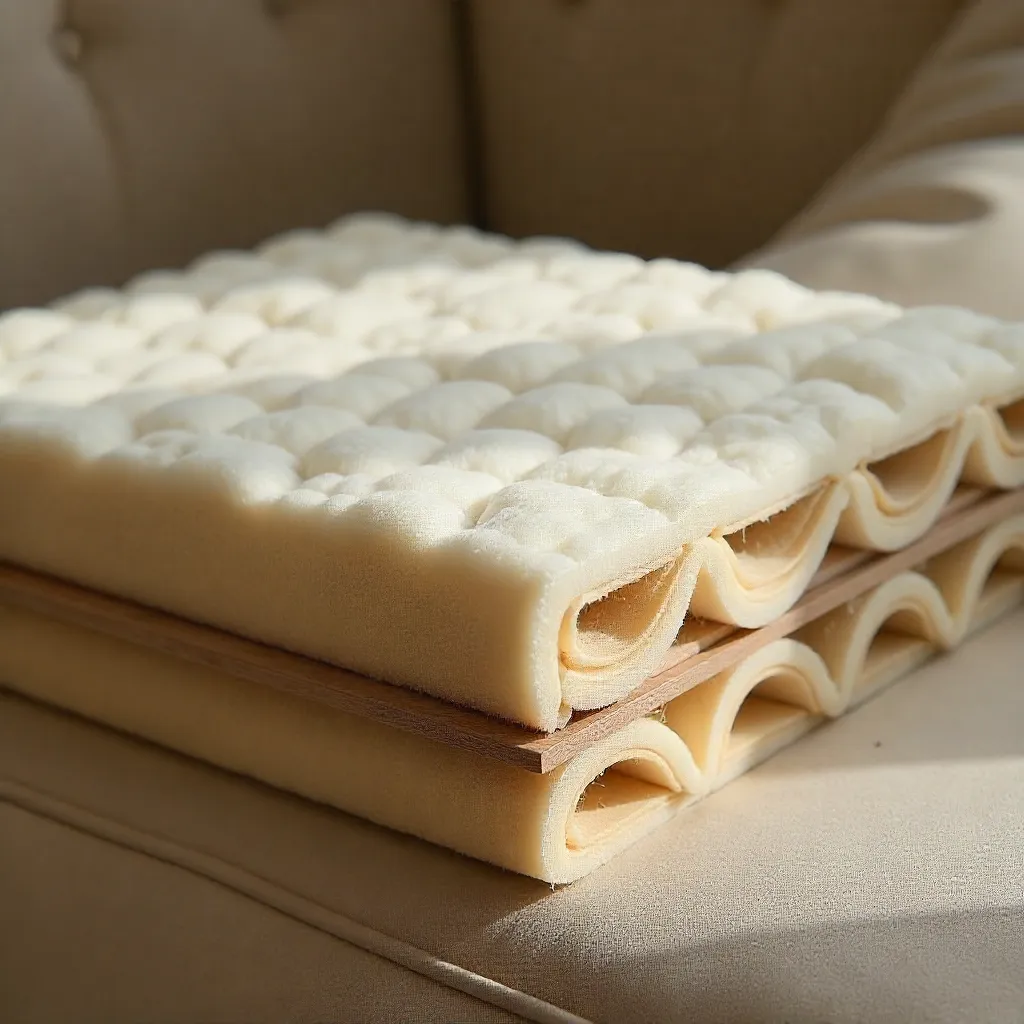
Once the springs are tied, the padding layers are built up systematically. Each layer serves a specific purpose, and the order matters greatly to the final result.
Foundation Layer
The first layer over the springs is typically burlap, a coarse natural fabric that prevents padding materials from working their way down between the springs. This layer also helps distribute weight evenly across the spring system.
Support Layer
Horsehair forms the primary support layer, providing the springiness that makes the seat responsive. This layer is built up gradually, with each handful placed and secured to create an even surface.
Comfort Layer
The final padding layer is wool, which provides the soft surface you feel when sitting. This layer is needled into place, creating a stable surface that conforms to your body while maintaining its structure.
Why Hand-Tying Matters
Modern upholstery often uses clips or wires to connect springs, methods that are faster but less durable. These connections can loosen over time, causing springs to shift and creating uncomfortable seating surfaces.
Hand-tying, while more time-consuming, creates connections that actually strengthen with use. The twine settles into position, and the knots tighten slightly, creating a more stable system over time rather than a less stable one.
Built to last generations
This durability means that hand-tied furniture can be reupholstered multiple times over its lifespan. The spring system remains sound, requiring only new padding and fabric to restore the piece to like-new condition.
For furniture that will be used daily and passed down through families, hand-tied construction is the only method that provides the necessary durability and comfort retention.
The Craft of Connection
Learning to hand-tie springs requires patience and practice. Each knot must be tied with consistent tension, and the pattern must be maintained across the entire spring system. This consistency is what separates professional work from amateur attempts.
The technique has been passed down through generations of upholsterers, with each practitioner adding their own refinements while maintaining the core principles. This living tradition ensures that the craft continues to evolve while preserving its essential qualities.